


Every old farmhouse in Britain once had a resident spirit, and every household knew the rules for keeping it. Leave out the cream, keep the hearth swept, never offer payment for work done, and never, under any circumstances, ask a brownie its name. Get it right and you had an invisible pair of hands about the place. Get it wrong and you had broken crockery, sour milk and a winter of small, deliberate cruelties.
Brownies, boggarts and hobgoblins are often lumped together as "household spirits", but they are not the same creature wearing different hats. They differ in temper, in habit and in how far north or west you happen to live. Here is how to tell them apart.
Brownies: the helpful ones, with conditions
The brownie is the classic domestic helper of Scottish and northern English folklore: a small, shaggy, brown-skinned figure who attaches himself to a farmhouse or family and works while everyone sleeps. He threshes corn, churns butter, herds sheep in bad weather and tidies the kitchen. He asks nothing for it, and this is the point.
Brownies are solitary and territorial. A brownie belongs to one house, not to a family name, and he does not travel with you if you move. In some accounts he will follow, but reluctantly, and only if the hearthstones go too. He is also touchy in a very particular way: he cannot bear to be watched, thanked fulsomely or paid.
That last rule is the one most often broken, and the stories are consistent about what happens next. A farmer, grateful for years of silent labour, leaves out a suit of clothes or a coin. The brownie takes offence at the implication that he is a servant, and either leaves the house for good or turns sour. In the version from the Borders, the brownie puts the clothes on, sings a mournful rhyme about how he will never work again, and vanishes. The kindness ruins everything.
What he will accept: a bowl of cream, a dish of milk, a bit of bread and honey, left where he can find it without being seen. Food is a courtesy. Money is an insult.
Boggarts: the same stock, gone wrong
Many folklorists treat the boggart as a brownie who has been badly used. The creature is the same order of being — attached to a house, a farm or a particular family line — but its temper has curdled. Where a brownie mends, a boggart breaks.
Boggarts specialise in household chaos with a mean streak: milk that turns, butter that will not come, tools that go missing and turn up in the byre, dogs that will not settle, and a general atmosphere of things being deliberately, quietly wrong. In the worst accounts, they throw objects, pull bedclothes off sleeping children and follow a family from house to house, since a boggart, unlike a brownie, is often tied to the bloodline rather than the building.
Lancashire gives us the most famous of them. Boggart Hole Clough, a wooded valley near Manchester, was said to be thick with boggarts and the surrounding farms plagued by them. The traditional remedy tells you a great deal about the British approach to the supernatural: rather than driving the boggart out, you give it somewhere else to live. A boggart can be "laid" into an object or a place — a stone, a stream, a field — and left there, so long as nobody is foolish enough to disturb it.
Traits at a glance
- Brownie: helpful, solitary, bound to a house or farm, works at night, will not accept payment, leaves if watched or given clothes.
- Boggart: malicious or at least severely grumpy, bound to a family or place, causes domestic misfortune and noise, hard to remove but possible to lay.
- Hobgoblin: a catch-all term, often friendlier than a boggart, large in the imagination, fond of practical jokes and warm hearths.
The line between them is thin. Some families speak of their brownie and their boggart as though describing the same individual on a good day and a bad one, which is probably closer to how the stories actually worked in practice.
Hobgoblins: the awkward middle
"Hobgoblin" is a looser label, and it is used in two ways. In older English writing it means a spirit of the household generally, related to the hob, a name still found in place names and dialect. In that sense, a hob is a homely, helpful creature much like a brownie — the Yorkshire and Lancashire hob who sits by the fire and does the odd job overnight.
But the word also carries a harder edge. Hobgoblins in literary and later folk usage are the rougher cousins: shape-shifting, unpredictable, capable of leading travellers astray and frightening children, yet not wholly malignant. They delight in confusion rather than destruction. A hobgoblin will hide your boots. A boggart will burn them.
Where brownies keep to the north and the Borders, hobgoblins turn up all over England, and the word has always been a useful basket for anything domestic and uncanny that does not fit neatly elsewhere.
Regional variants worth knowing
Britain's household spirits shift name and manner as you travel, and the differences are usually geographic and occupational rather than theological.
- Scotland: the brownie is king, with the broonie of the Highlands and the Shetland trow as cousins. Orkney and Shetland also give us the hogboon, a mound-dwelling spirit connected to a farm's ancestral line.
- The Borders and northern England: brownies and boggarts share the same farmhouse, sometimes in the same story.
- Cornwall: the piskie or bucca takes on domestic duties in some tellings; the bucca is often left a crust of bread or a portion of fish.
- Wales: the bwbach or bwci is the household helper, and he is notoriously fond of a bowl of cream and a warm corner by the fire.
- Isle of Man: the fenodyree, a shaggy, immensely strong helper who will do a night's work no man could manage — and who disappears just as fast if offered clothing.
The pattern is remarkably consistent: the further north and west you go, the more firmly the spirit is tied to a specific farm, hearth and family.
How to keep the peace
Whether you are reading folklore or writing it, these are the rules that show up again and again. They are not instructions for summoning anything. Treat them as the etiquette the older stories assume.
- Feed, do not pay. A saucer of cream or milk, set down quietly and not mentioned, is the standard offering. Money and clothing break the arrangement.
- Do not watch. The work is done at night, unseen. Curiosity ends the contract.
- Keep the hearth and the threshold in order. Swept hearths, clean doorsteps and an honest fire are the domestic virtues the spirits are said to approve of.
- Mind what you name. Names give a hold over a thing, and asking a brownie its name is the quickest way to lose it.
- If it turns, move it on rather than fight it. The old remedy for a boggart is to lay it somewhere harmless — a stone, a boundary stream — and then leave that spot alone.
One useful test when you meet these creatures in a story: ask what the spirit wants. The helpful ones want a place and a portion. The malicious ones want attention. That single question sorts brownies from boggarts more reliably than any shaggy coat or extra finger ever will.
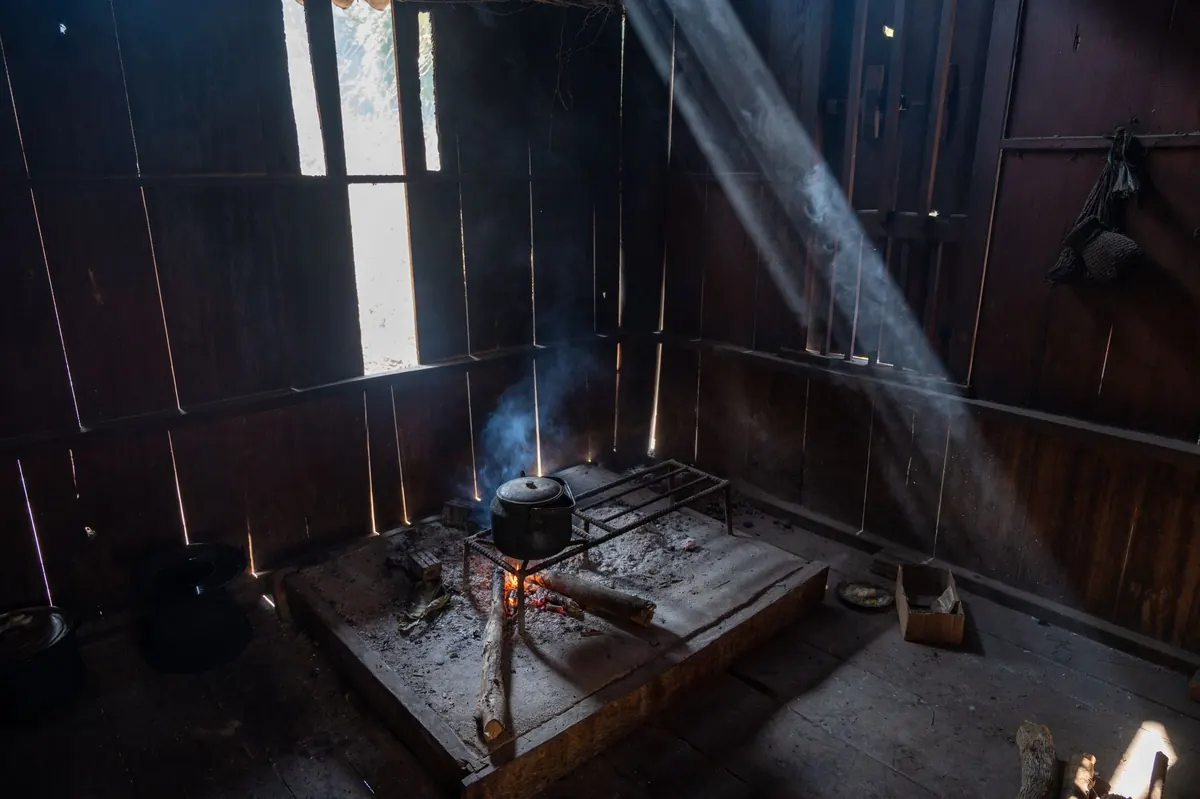
Photo: Nguyen Ngoc Tien / Pexels