




Every folktale sounds as though it has always existed. That is not luck, and it is not ancient memory; it is craft. The best of them are built from a small kit of parts — a lack, a journey, a helper, three attempts — recombined so often that they feel inevitable. You can use the same kit. You can write a story tonight that sounds as though it came out of a chimney corner, without pretending to be someone you are not or claiming a tradition that is not yours.
Start With a Lack, Not an Idea
A folktale rarely begins with a character who is content. It begins with something missing, broken or owed. A couple has no children. A net comes up empty. A promise is made and quietly broken. The lack sets the world out of balance, and the story is the business of putting it right — or of showing why it cannot be.
Before you invent anything, answer one question: what is wrong at the start that was not wrong before? If the answer is vague, the story will drift. "A girl is unhappy" is a mood. "A girl's father has promised her to a stranger she has never met" is a folk situation. Give the lack a physical shape: an empty chair, an unpaid debt, a field that will not yield.
The Bones Every Folk Plot Shares
Strip back any tale you love and you will find roughly the same skeleton. Folk plots do not need to be novel; they need to be clear.
- The lack or the break. Something is missing, or a rule has been broken.
- The departure. The hero leaves home — often the youngest, the least likely, the one nobody expects.
- The encounter. A stranger, an animal or an old woman appears, sets a condition, or offers help for a price.
- The tests. Usually three, each a variation on the last. The first two fail and the third succeeds, or the first two succeed and the third shows what the hero is really made of.
- The return. The hero comes home with something — a cure, a companion, a scar — and the world is restored, though rarely exactly as it was.
Write your first draft against that shape and it will hold together. Break it later, once you know why you are breaking it.
Motifs Are Furniture, Not Plot
Motifs are the recognisable objects that pass from tale to tale: the talking beast, the forbidden door, the impossible task, the bargain struck in the dark, the stranger who must be fed before he will speak. Used well, they save you a great deal of explanation. A reader meets a spinning wheel in a locked room and already knows what kind of trouble is coming.
Two cautions. A motif is not a story; ten heaped together make a list, not a tale. Choose two or three and give each a job to do. And remember that motifs carry associations. A red thread means one thing in one tradition and nothing at all in another. If you are drawing on a particular culture's imagery, learn what it means there before you make it yours.
Write It for the Ear, Not the Eye
These stories were spoken long before they were printed, and prose written for the page can sound wrong in the mouth. Test every sentence: could you say it across a kitchen table without stumbling?
- Keep clauses short and join them with and, so, but. Orally, "and" is a hinge, not a sin.
- Repeat with a twist. "He walked a mile. He walked another. The third mile was longer than the other two."
- Use openings sparingly. A formula such as "There was a man, and there was not" earns its place by setting a tone. A poor imitation just sounds quaint.
- Describe little, but specifically. One detail — boots that were always wet — beats a paragraph of scenery.
- Cut what a listener would forget. If you cannot recall it after telling the tale aloud, neither will anyone else.
Where and When to Set It
You have two good options and one bad one. Set it nowhere in particular — "a village at the edge of a forest" — and the tale floats free, belonging to anyone who hears it. Or set it precisely, with real hills, real trades and real weather, which gives it weight and grit. The bad option is a vague half-place that reads as stage scenery.
If you use a real village or a real family name, remember that people live there. Fiction set in recognisable places can be a gift to some readers and an insult to others. When in doubt, move the hill.
Borrowing from Living Traditions
Folklore belongs to communities, and some of it is sacred, private, or simply not yours to repackage. That is not a reason to write only about the place you were born; it is a reason to do your reading properly.
Before You Borrow a Story
- Learn the context before you borrow the shape. Where does it come from, who tells it, and what is it for?
- Avoid tales that are ceremonial, or that the people who hold them describe as not for outsiders.
- Change more than the names. If you keep the plot and every image, you have made a copy, not a tale.
- Ask, where asking is possible. Tell people what you are writing. Most will say clearly what matters and what is off limits.
- Credit your sources in a short note, even in fiction. It costs nothing and it is honest.
Tell It Before You Write It
Here is a way in that takes an evening. Choose a lack. Choose one helper and one obstacle. Decide that your hero will try three times. Then say the whole story out loud, to a friend or to the room, without writing a word. Notice where you hesitate: that is where the plot is weak. Notice what you forget by the end: that was never needed.
Write it down afterwards, in the plainest language you can stand, and read it back aloud. Trim a quarter of it. The version that survives being spoken twice is the version worth keeping.
Folktales are not fragile. They have been retold, mistold and quietly repaired for centuries, and they take well to new voices. Yours does not have to be perfect. It has to be tellable — and then it has to be told.
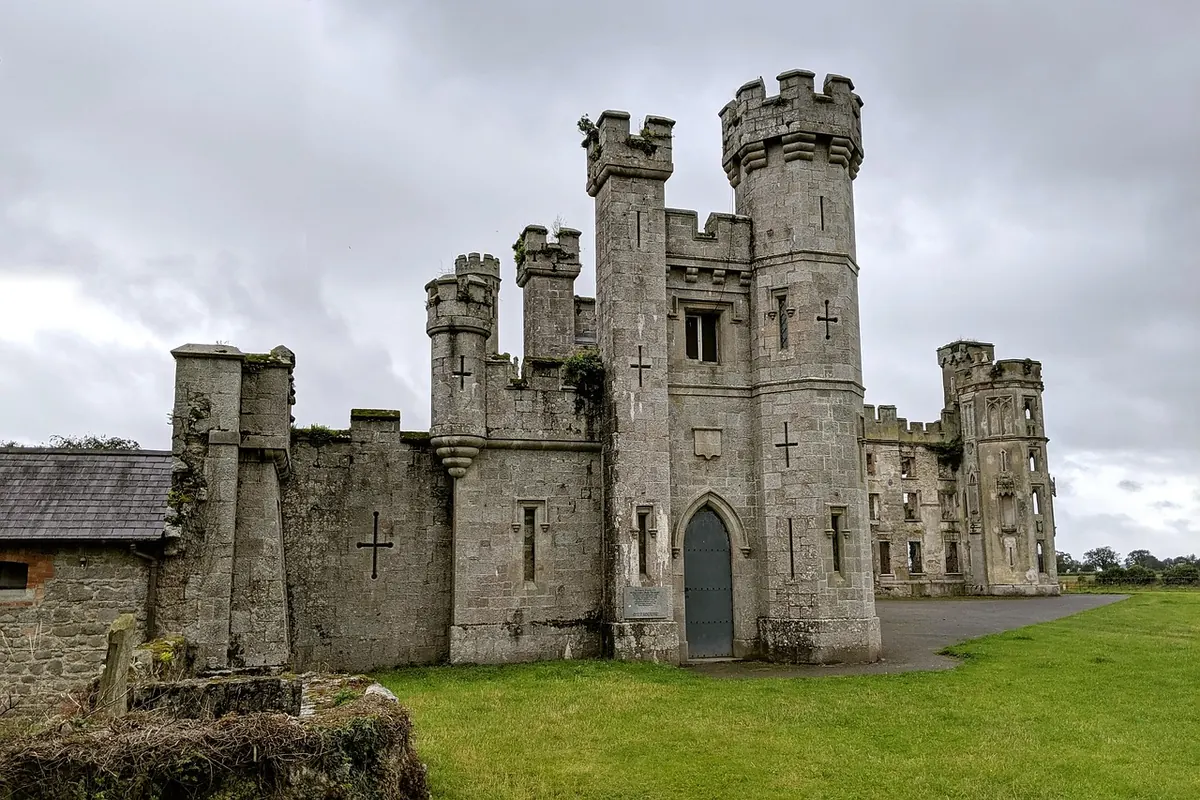
Photo: JessBaileyDesign / Pixabay